Drunken Noodles vs Pad Thai: What’s the Difference?
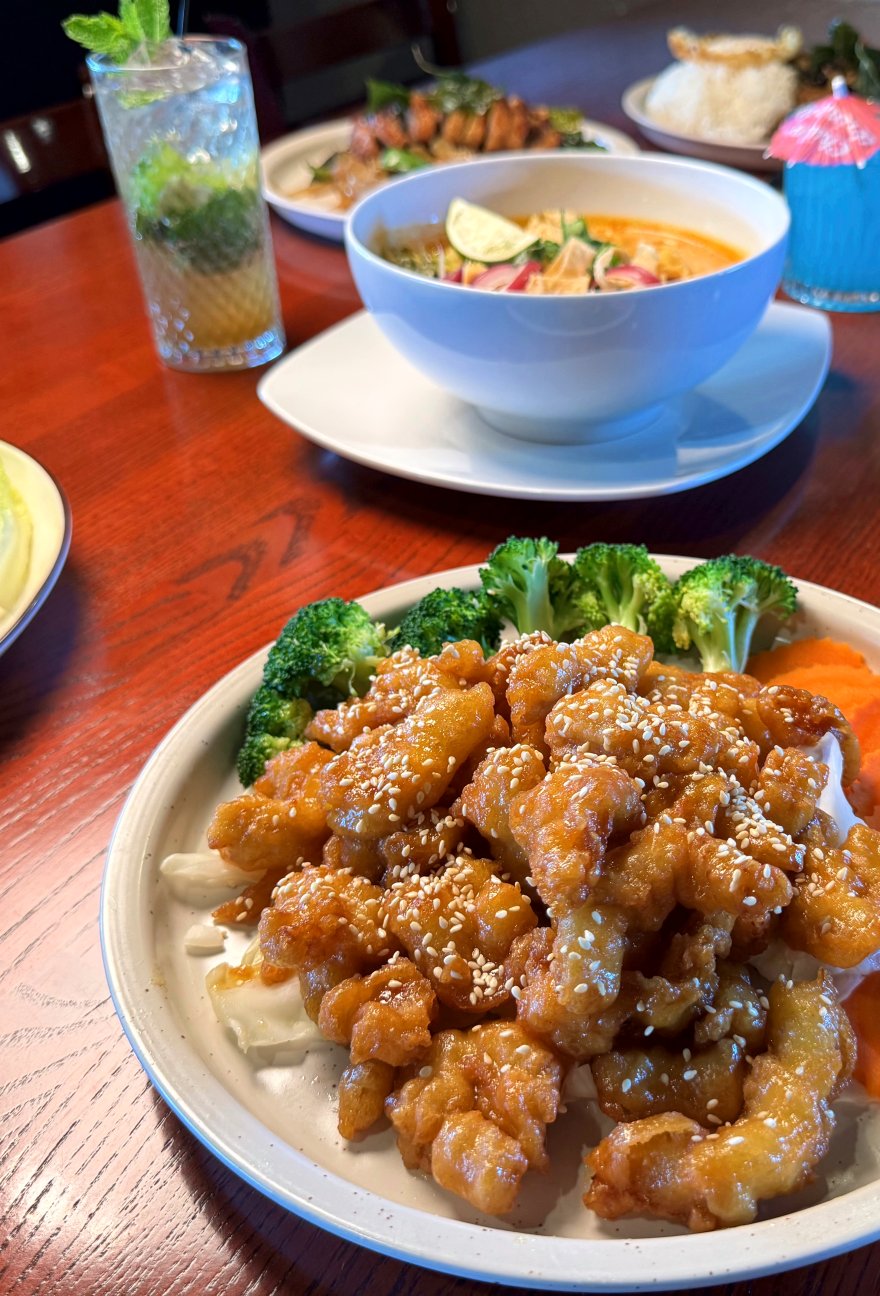
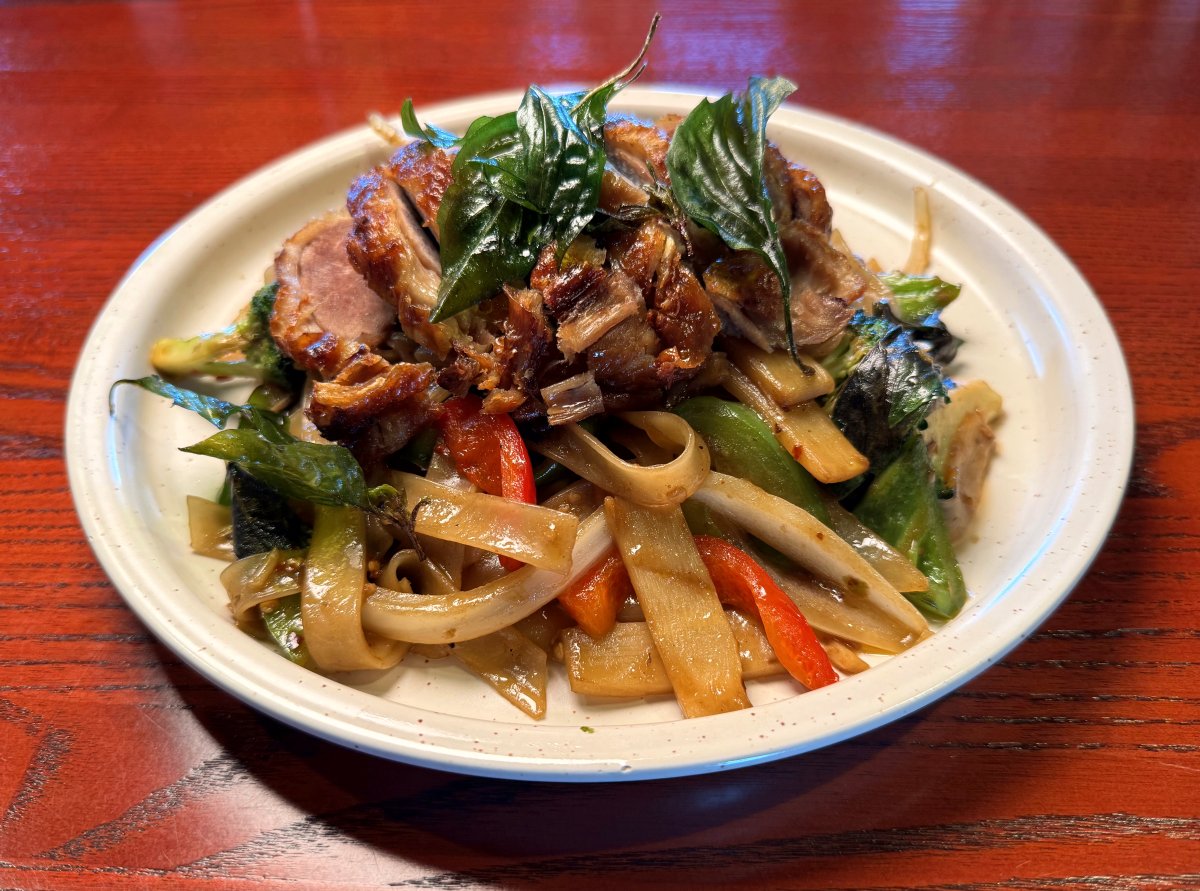

Walk into almost any Thai restaurant in the United States and two noodle dishes nearly always appear near the top of the menu: pad thai and Drunken Noodles. They are both familiar, both satisfying, and both easy to confuse if your reference point is simply "Thai noodles with sauce." Yet on the plate, they behave like entirely different meals.
One is usually sweet-tangy, nutty, and tidy enough to eat from a takeout box without much drama. The other tends to arrive glossy, aromatic, and a little unruly, with broad noodles that grab sauce and vegetables in a way that feels more like a stir-fry than a composed noodle dish. If you have ever hesitated between the two, the choice matters more than it might seem.
The difference is not just heat level, and it is not simply that one has peanuts and the other does not. It comes down to noodle shape, sauce balance, aromatics, texture, and the role each dish plays in Thai cooking as it has traveled abroad. Once you know what separates them, ordering becomes easier, and so does judging whether a restaurant is doing either dish well.
The short answer
Pad thai is typically a sweeter, tangier rice noodle stir-fry built around tamarind, palm sugar, fish sauce, egg, and often peanuts or bean sprouts. It leans toward contrast and balance. You taste sour, sweet, salty, and a mild savory depth in distinct layers.
Drunken Noodles, often listed by the Thai name pad kee mao, are usually spicier, more aromatic, and more savory-forward. They are made with wide rice noodles and rely on soy-based seasoning, chilies, garlic, and Thai basil for their character. If pad thai is bright and structured, Drunken Noodles are bold and heady.
That is the practical distinction most diners need. The more interesting answer sits in the details.
Why they seem similar at first glance
From across the dining room, both dishes can look like variations on the same theme. They are stir-fried noodles, often cooked in a wok over high heat, and commonly paired with chicken, shrimp, tofu, or beef. Both may include egg. Both can show up with bean sprouts, lime, or scallions depending on the restaurant. In American Thai restaurants, menu descriptions also tend to flatten the differences by using broad terms like "stir-fried rice noodles" or "house special sauce."
That overlap is real, but it can hide the identity of each dish. I have seen countless takeout containers labeled so vaguely that the only reliable clue was noodle width. A narrow, slightly sticky tangle with crushed peanuts pointed to pad thai. Wide, slippery ribbons with basil perfume and visible chili seeds suggested Drunken Noodles. That alone tells you how much noodle choice and aromatics define these dishes.
Pad thai is built on balance
A good pad thai tastes deliberate. The sauce usually brings together tamarind for acidity, palm sugar for sweetness, fish sauce for salinity, and often dried shrimp or another savory element for depth. The proportions vary by cook, but the signature profile should feel balanced rather than aggressively spicy or overwhelmingly sweet.
In weaker versions, especially in restaurants trying to cater to a broad audience, pad thai can drift into sugar-heavy territory. That is one reason some people think they do not like it. When the tamarind is too faint and the sauce turns syrupy, the dish loses its edge. Properly made, pad thai has a gentle chew from thinner rice noodles, a soft richness from egg, crunch from sprouts or peanuts, and enough acidity to keep the whole thing from feeling heavy.
Peanuts are often a defining marker in the minds of diners, and understandably so. They add texture and a toasty note that fits the tamarind-sugar base. Lime wedges on the side let you sharpen the dish at the table. That little final squeeze matters. Pad thai should wake up when acid hits it.
Drunken Noodles are about heat, basil, and wok energy
Drunken Noodles operate from a different center of gravity. The flavor usually starts with garlic and fresh chilies hitting a hot wok, followed by protein, vegetables, and broad rice noodles that can stand up to a stronger sauce. Thai basil is not a garnish here. It is one of the central flavors. When it wilts into the heat, it perfumes the dish in a way that instantly separates it from pad thai.
The sauce often uses dark soy sauce, light soy sauce, oyster sauce, fish sauce, and a bit of sugar, though house recipes vary. The end result tends to be darker, deeper, and more savory than pad thai. Instead of tamarind-led brightness, you get a rounded umami profile with a peppery herbal top note from basil.
The heat level is another common clue. Many restaurants make Drunken Noodles hotter by default than pad thai, though that is not a universal rule. In practice, even a mild version should still feel assertive because chilies and basil are part of the dish’s identity, not optional add-ons. When a plate of Drunken Noodles arrives with no basil aroma and no chili presence, something important has been lost.
The noodle question matters more than most menus admit
If you only remember one technical difference, make it this one: pad thai and Drunken Noodles usually use different noodles, and that changes everything.
Pad thai often uses medium-width rice noodles, sometimes sold dried and soaked before cooking. They are narrow enough to clump slightly with sauce, egg, and small garnishes. That gives pad thai its familiar, cohesive texture. Every bite can carry a little of everything.
Drunken Noodles almost always rely on broad rice noodles, fresh if possible. These are the wide, flat sheets cut into ribbons that fold over themselves and char at the edges in a good wok. They have more surface area, which means they take on seared sauce differently. They also bring more chew and a slippery, substantial feel. Because of that width, the dish reads less like a noodle pile and more like a hot stir-fry where noodles are the main body.
Restaurants that substitute one noodle for the other can blur the line between dishes. It happens, especially in smaller operations trying to simplify prep. But the result is noticeable. Pad thai made with extra-wide noodles starts to feel clumsy. Drunken Noodles made with thin noodles lose their swagger.
Sauce is where the personalities split
Menus rarely explain sauces well, but the sauces are the clearest dividing line.
Pad thai sauce is usually a balancing act between sweet, sour, and salty. Tamarind provides the tart backbone. Palm sugar rounds it out. Fish sauce adds salinity and funk in the best sense, meaning a savory complexity rather than a fishy taste. When the proportions are right, the dish feels bright and layered. You can pick out the contrasts.
Drunken Noodles lean toward savory, smoky, and spicy. Soy sauces give color and depth. Oyster sauce often adds body and slight sweetness. Fish sauce can still appear, but it plays a different role. Instead of highlighting sharp contrast, the sauce here tends to coat and unify. It clings to the wide noodles and amplifies the wok-char, garlic, and basil.
This is one reason diners who dislike sweet-savory dishes often prefer Drunken Noodles. They find pad thai too sweet, especially in Americanized versions. On the other hand, people who want a more measured and balanced noodle dish often choose pad thai because it feels less aggressive.
Aromatics and vegetables tell their own story
Pad thai commonly includes bean sprouts, chives or scallions, egg, and peanuts. Those ingredients support the sauce by adding freshness, crunch, and richness. Even tofu, when used, often works as a texture component as much as a protein. The dish tends to keep its vegetables relatively simple.
Drunken Noodles usually welcome a broader set of vegetables, and they often come cut larger. Chinese broccoli is classic in many versions, though bell peppers, onions, baby corn, carrots, green beans, or tomatoes may appear depending on the kitchen. This makes the dish feel heartier and a little less delicate than pad thai. In some restaurants, a serving of Drunken Noodles can look closer to a noodle stir-fry with vegetables than to a tightly composed noodle dish.
The basil is the non-negotiable aromatic. It gives the dish its unmistakable lift. Without basil, Drunken Noodles can still taste good, but they stop tasting quite like themselves.
What about the name "Drunken Noodles"?
The name raises questions almost every time. There is no standard answer that everyone agrees on, and restaurants often repeat different stories. Some say the dish is meant to be eaten after a night of drinking because the spice revives you. Others suggest it pairs especially well with beer. Another theory is that "drunken" refers to the freewheeling style of the stir-fry rather than any alcohol in the pan. The dish does not usually contain alcohol, despite what the English name suggests.
What matters for diners is this: do not order Drunken Noodles expecting boozy flavor. Expect wide noodles, heat, basil, garlic, and a dark savory sauce.
Heat level is only part of the answer
A lot of diners reduce the comparison to this: pad thai is mild, Drunken Noodles are spicy. That shorthand is not wrong, but it is incomplete.
Pad thai can certainly be spicy if a kitchen adds fresh chilies, chili vinegar, or dried chili flakes. In Thailand, sweetness rarely exists in isolation from other strong flavors. Meanwhile, Drunken Noodles can be toned down for customers who do not want serious heat. In many restaurants outside Thailand, "mild" Drunken Noodles are common.
The more useful distinction is that pad thai does not depend on spice to define itself, while Drunken Noodles usually depend on chili and basil to some degree. You can have a credible pad thai with almost no heat. A completely non-spicy Drunken Noodles often tastes like a watered-down cousin of the original idea.
Texture separates them just as much as flavor
Texture is where experienced diners often make their decision.
Pad thai should have noodles that are tender but not mushy, with bits of egg, crunch from sprouts, and optional chopped peanuts creating contrast. It should feel integrated. The sauce should cling, not pool.
Drunken Noodles should feel looser and more slippery, with some char on the noodles if the wok is hot enough. The vegetables should retain bite. The basil should be wilted but still fragrant. Ideally, there is a little edge in the flavor from high-heat cooking, the subtle smokiness people often describe as wok hei in broader stir-fry cooking discussions.
When either dish sits too long in a takeout container, these textures suffer in different ways. Pad thai can congeal and turn sticky. Drunken Noodles can steam themselves soft and lose that fresh basil aroma. If you are ordering delivery, pad thai is usually the more forgiving choice over a longer drive, though a well-packed Drunken Noodles can still travel well if not overloaded with sauce.
How restaurants in the West shape expectations
For many people, pad thai is the gateway dish, and that affects how both items are understood. It is familiar, approachable, and often used as the baseline for Thai food by diners who are new to the cuisine. Because of that role, restaurants sometimes soften or sweeten pad thai to suit a wider audience. It becomes less tangy, less funky, and more universally comforting.
Drunken Noodles, by contrast, are often marketed as the bolder choice. They are the menu item for people who want "something with a kick" or who have graduated from pad thai and want a dish with more heat and savory depth. That framing is not entirely fair to either dish, but it is common.
In stronger Thai restaurants, you will notice more integrity in both preparations. The pad thai will have tamarind brightness and restraint with sugar. The Drunken Noodles will taste of basil and wok, not just soy sauce and generic heat. In weaker restaurants, both can collapse into sweet noodles versus spicy soy noodles, which misses the nuance.
Which one is more traditional?
That question gets messy because both dishes have evolved across regions and restaurant cultures. Pad thai has a particularly visible public https://brookstnnh456.focalledger.com/posts/how-to-create-the-perfect-drunken-noodles-stir-fry identity and has long been associated with Thailand’s culinary image abroad. Drunken Noodles, or pad kee mao, also have established roots, though versions vary widely and restaurant interpretations can differ more dramatically.
Rather than rank one as more authentic in a blanket sense, it is more useful to ask whether each dish reflects its core characteristics. A pad thai without tamarind presence and balanced seasoning feels off. Drunken Noodles without basil, broad noodles, or aromatic heat feel off. Authenticity in restaurant settings often comes down to fidelity of flavor and method, not rigid adherence to a single master recipe.
When to order pad thai, and when Drunken Noodles make more sense
There are practical moments when one dish clearly suits the occasion better than the other.
If you want something familiar, balanced, and easier to share with a table that includes cautious eaters, pad thai is often the safer call. It also works well when you want a dish that stands on its own without demanding much from your palate. Good pad thai is quietly precise. It does not need to shout.
If you want deeper savoriness, more vegetables, and a dish that feels more forceful and aromatic, Drunken Noodles are usually the better order. They are especially satisfying when you crave heat or when you want a noodle dish that feels closer to a proper stir-fry dinner than to a neatly composed noodle classic.
Here is a compact way to think about it:
- Choose pad thai if you want sweet-tangy balance, peanuts, and a milder overall profile.
- Choose Drunken Noodles if you want wide noodles, basil, chilies, and a darker savory sauce.
- Choose pad thai for broader crowd appeal and easier leftovers.
- Choose Drunken Noodles when you want stronger aromatics and more vegetable presence.
Common mistakes people make when comparing them
One mistake is assuming pad thai is "beginner Thai food" and therefore somehow less serious. At its best, it is difficult to make well. Balancing tamarind, sugar, fish sauce, egg, and noodle texture in a hot wok is not trivial. Many home cooks discover quickly that it is easier to make a decent soy-based noodle stir-fry than an excellent pad thai.
Another mistake is treating Drunken Noodles like a pure heat challenge. Spice is part of the experience, but the dish is not just a test of tolerance. The basil, the garlic, the slight sweetness under the soy, and the chew of broad noodles matter just as much.
A third mistake is expecting one fixed recipe everywhere. Thai restaurant cooking is adaptive by nature. Regional habits, ingredient access, and local diner preferences all affect the plate. Chinese broccoli might be swapped out. Tamarind might be more or less pronounced. Heat levels can swing dramatically. Knowing the underlying structure is more useful than memorizing a rigid formula.
What to look for if you care about quality
If you want to judge these dishes beyond simple preference, there are a few signs worth watching.
For pad thai, look for noodles that are separate rather than gummy, a sauce that tastes of tamarind and fish sauce instead of just sugar, and toppings that add freshness and crunch rather than decorative clutter. The dish should not be wet, and it should not taste like dessert with soy sauce.
For Drunken Noodles, look for basil aroma that hits before the plate lands, noodles with some seared edges, vegetables that still have life, and a sauce that tastes layered rather than flatly salty. If everything is the same dark brown and the basil looks like an afterthought, the kitchen probably rushed it.
The protein matters too, though less than people think. Shrimp in pad thai can be excellent, but if the sauce is off, good shrimp will not save it. Tender chicken in Drunken Noodles is nice, but the dish lives or dies by noodle texture and aromatic balance.
Making sense of the menu when descriptions are vague
Menu language can be misleading, especially online. If a restaurant lists pad thai as "stir-fried rice noodles with egg and tamarind sauce," that is a good sign because tamarind is named. If Drunken Noodles are described with phrases like "spicy basil," "broad rice noodles," or "house chili garlic sauce," that points in the right direction.
If both dishes have nearly identical menu descriptions except for spice level, the kitchen may not be distinguishing them strongly enough. That does not guarantee a bad meal, but it suggests a more generalized menu style.
One habit that helps is checking customer photos rather than relying on the official description. In photos, noodle width, basil presence, peanut garnish, and vegetable mix become obvious immediately.
So which one is better?
That depends less on quality in the abstract and more on appetite. There are nights when pad thai is exactly right, especially when you want a balanced, familiar dish that rewards attention without overwhelming the palate. There are other nights when only Drunken Noodles will do, usually when you want heat, basil, garlic, and the kind of savory depth that lingers after the plate is gone.
If you like brighter contrasts, pad thai often wins. If you like darker, spicier, more aromatic stir-fries, Drunken Noodles usually take it. Many diners eventually settle into a pattern: pad thai when introducing someone to Thai food, Drunken Noodles when ordering for themselves.
The best version of either dish should taste intentional. Pad thai should not be candy-sweet. Drunken Noodles should not just be soy sauce and chili flakes. Once you know that, the choice becomes less confusing. You are not deciding between two generic noodle dishes. You are deciding between two very different expressions of what a wok, rice noodles, and a handful of well-judged ingredients can do.
Nakhon Luang Thai Kitchen
Address: 805 Village Center Dr, Colorado Springs, CO 80919
Phone number: +17195315175
FAQ About Drunken Noodles
What makes it drunken noodles?
Drunken noodles, or Pad Kee Mao, get their name from the Thai word khi mao (meaning "drunkard"). They contain no alcohol. The name comes from the idea that the dish is a popular late-night meal to cure a hangover or a great food to eat with a cold beer.
What is the difference between pad see ew and drunken noodles?
While both Pad See Ew and Drunken Noodles use the same wide rice noodles, Pad See Ew is a mild, sweet-savory dish made with dark soy sauce and Chinese broccoli, whereas Drunken Noodles (Pad Kee Mao) are fiery, garlicky, and herbaceous with fresh chilies and Thai basil.
What are traditional drunken noodles?
Traditional drunken noodles, known as Pad Kee Mao in Thai, are a fiery, savory street food stir-fry made with wide flat rice noodles, fresh garlic, lots of hot chilies, meat or tofu, and fragrant holy basil. Despite the name, they contain no alcohol; the dish is traditionally eaten late at night or as a hangover cure because the intense spice helps clear the head.